


Documentary Wedding Videography vs Cinematic Wedding Videography | Alyssa Kaufman Films
- Alyssa Kaufman
- Jun 4
- 3 min read

There’s a phrase I hear a lot when couples first reach out:
“We just want everything to feel natural.”
And I always understand what they mean. They’re not asking for less intention. They’re asking for less interruption. Less awareness of the camera. Less feeling like anything is being staged just for the sake of a film.
But one of the most common misunderstandings in wedding videography is thinking you have to choose between “documentary wedding videography” vs “cinematic wedding videography” as if they sit on opposite sides of a line.
In reality, they describe two different parts of the process—and they work together.


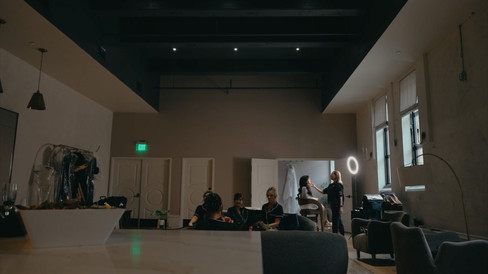
Documentary wedding videography vs cinematic wedding videography: how the day is captured
Documentary wedding videography refers to how the wedding is filmed in the moment.
It’s about observation rather than direction. Letting real moments unfold instead of shaping them for the camera.
This means:
no repeating emotional moments
no staged reactions
no manufactured interactions
no interrupting moments to redo them
It’s rooted in awareness—paying attention to what’s already happening and allowing it to lead.
This is where some of the most meaningful parts of a wedding live. The quiet pause before walking down the aisle. The laughter during speeches. The moments people don’t realize they’re making.
But documentary doesn’t mean nothing is ever guided. It means the day is not built around direction.


Cinematic wedding videography: how the story is produced
Cinematic wedding videography refers to how the film is produced in the edit.
It’s about pacing, emotion, structure, music, and rhythm—how the story comes together after the day has been filmed.
This is where individual moments become a cohesive experience:
the emotional arc of the film
the flow between scenes
the sound and music choices
the overall tone and feeling
Cinematic doesn’t mean staged.
It means intentional storytelling using real moments.
A wedding film can be fully authentic in how it’s captured, and still feel deeply cinematic in how it’s produced afterward.

Where my approach sits
My work is documentary-led in how I film your day, and cinematic in how I shape the final story.
Most of the time, I’m observing rather than directing—focused on real interactions and emotion as they naturally unfold.
But there are moments where a little direction becomes helpful, not to manufacture anything, but to support what’s already happening in a real environment.
Because wedding days aren’t completely unstructured. They move between timelines, photographers, family coordination, and natural pauses. My role is to move with that rhythm without interrupting it.

A closer look at how I actually work
One thing I always want couples to feel is this:
You are never going to feel like you are acting for my camera.
Even when there is a little direction, it’s never about staging emotions. It’s about supporting real moments so they feel complete on film.
During getting ready, I’ll sometimes guide small variations of the same moment so the story feels visually and emotionally full. A dress might take only a few seconds to zip, but within that moment are different layers—hands, expression, reaction, connection. So I might film a few simple angles: the zip itself, your face, the person helping you. Not to repeat anything, but to preserve details that would otherwise pass too quickly.
During couple portraits, I work alongside the photographer’s direction, but my focus is different. I use light prompts that bring out natural interaction instead of stiff posing. Nothing scripted—just simple direction that leads back to movement, personality, and connection.
Most of what I’m looking for is laughter. The in-between moments. The way you naturally are when you’re not thinking about being filmed.
Nothing forced. Just gently uncovered.

Why this distinction matters
The difference between wedding videography styles isn’t just aesthetic—it’s about experience.
Some films are built through direction. Others through observation. My approach lives in between: documentary-led capture with cinematic storytelling.
Because weddings themselves are already both structured and spontaneous. There are planned moments, guided moments, and completely unplanned moments that often end up meaning the most.

What couples are really asking
Most couples aren’t thinking in categories.
They’re really asking:
Will I feel comfortable?
Will I feel like myself?
Will my film reflect my actual day?
Those answers come less from labels, and more from how the filmmaker moves through the space.
Closing
A wedding film isn’t meaningful because it avoided direction entirely.
And it isn’t meaningful because it was heavily staged.
It’s meaningful when it reflects the truth of the day as it actually unfolded, and is shaped into a story that lets those moments breathe.
That balance—real moments filmed with care, and thoughtfully produced afterward—is where documentary-led filmmaking and cinematic storytelling meet.

Comments